
Cannabis Education, Lifestyle & Wellness, Strain Guides
Cannabis Leaf: Understanding Fan Leaves and Sugar Leaves
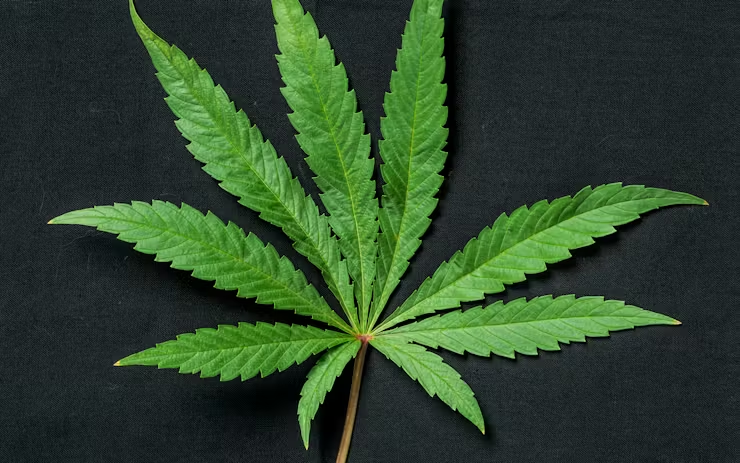
The pot leaf stands as arguably the most recognizable symbol in cannabis culture, appearing on everything from flags to clothing to logos. Yet many consumers don’t fully understand what these iconic leaves actually do for the plant, how they differ from the parts we consume, or why growers pay such close attention to leaf health.
Understanding cannabis leaf structure, function, and varieties helps both growers and consumers appreciate the plant’s biology. Whether you’re cultivating cannabis, exploring plant anatomy, or simply curious about this cultural icon, this comprehensive guide examines everything you need to know about cannabis leaves.
What is a Cannabis Leaf?
The pot leaf serves essential functions in cannabis plant biology and growth.
Basic Definition
Cannabis leaves are the broad, multi-pointed foliage structures that extend from branches throughout the plant. They act like solar panels, absorbing light essential for photosynthesis—the process by which plants convert light energy into chemical energy for growth.
Iconic Appearance
The classic cannabis leaf features:
- Multiple pointed segments (called leaflets or blades)
- Serrated (saw-toothed) edges
- Distinct venation patterns
- Deep green color (when healthy)
- Symmetrical arrangement
This distinctive shape makes cannabis leaves instantly recognizable worldwide.
Cultural Significance
Beyond botany, the cannabis leaf serves as:
- Symbol of cannabis culture — appearing on merchandise, art, and media
- Political statement — representing legalization movements
- Recognition marker — instantly identifying cannabis-related content
- Design element — incorporated into fashion, graphics, and branding
The leaf’s cultural importance far exceeds its functional role in the plant.
Cannabis Leaf Anatomy and Structure
Understanding structure clarifies function.
Leaflet Arrangement
Palmate Structure:
Cannabis leaves display palmate (hand-like) arrangement where multiple leaflets radiate from a single point, like fingers from a palm.
Number Variation:
- Young plants: 1-3 leaflets
- Mature vegetative plants: 5-9 leaflets most common
- Some plants: Up to 11 or even 13 leaflets
- Indica varieties: Typically wider, fewer leaflets
- Sativa varieties: Typically narrower, more leaflets
Leaf Components
Blade/Leaflet:
The individual pointed segments that make up the full leaf.
Petiole:
The stem connecting the leaf to the branch.
Stipules:
Small, thin growths at the base where petiole meets branch.
Veins:
Transport systems carrying water, nutrients, and sugars throughout the leaf.
Indica vs Sativa Leaf Differences
Indica Leaves:
- Broader, wider leaflets
- Darker green typically
- Fewer leaflets (5-7 common)
- Shorter, stockier overall appearance
Sativa Leaves:
- Longer, thinner leaflets
- Lighter green often
- More leaflets (7-9+ common)
- Taller, more stretched appearance
These differences help growers identify plant genetics visually.
Fan Leaves vs Sugar Leaves
Not all cannabis leaves serve the same purpose or end use.
Fan Leaves
Definition:
The large leaves extending from branches on long stems (petioles), growing away from bud sites.
Characteristics:
- Large size (can be palm-sized or bigger)
- Long stems
- Extend well past buds
- Minimal to no trichome coverage
- Bright to dark green
Function:
Primary photosynthesis—these leaves capture light and convert it to energy for plant growth.
Trichome Content:
Very low. Fan leaves have few to no trichomes, meaning minimal cannabinoid content.
Uses:
- Composting
- Juicing (raw consumption)
- Animal feed
- Generally discarded
- Not suitable for smoking or extraction due to low potency
Sugar Leaves
Definition:
Small leaves growing directly from or within bud sites, fully or partially covered in trichomes.
Characteristics:
- Small size
- Very short or no visible stems
- Grow integrated with buds
- Covered in crystalline trichomes (“sugar”)
- Often lighter green due to trichome coverage
Function:
Both photosynthesis and cannabinoid/terpene production via trichomes.
Trichome Content:
High. These leaves are covered in resin glands, giving them a frosty, sugary appearance.
Uses:
- Saved as “trim”
- Pre-roll material
- Extraction (concentrates, edibles)
- Lower-grade smokable products
- Significantly more valuable than fan leaves
Why the Distinction Matters
For Growers:
Understanding which leaves to remove during trimming affects final product quality and efficiency.
For Consumers:
Knowing that pre-rolls labeled “trim” contain sugar leaves (potent) versus products made with fan leaves (not potent) helps assess quality.
For Processors:
Sugar leaf trim is valuable for extraction; fan leaves are waste material.
How Many Leaves Does a Pot Leaf Have?
The question refers to leaflet count on individual leaves.
Typical Counts
Most Common:
5, 7, or 9 leaflets per leaf
Range:
Can vary from 1 (seedling stage) to 13+ (rare, but possible on large plants)
Maturity Dependent:
- Seedlings: Start with single-blade leaves
- Young plants: Progress to 3-blade leaves
- Vegetative growth: Typically 5-7 blades
- Mature plants: Often 7-9 blades
- Some genetics: Up to 11 or 13 blades
Factors Affecting Count
Genetics:
Different strains naturally produce different blade counts. Indica-dominant varieties often have fewer, wider blades; sativa-dominant more, narrower blades.
Plant Health:
Stressed or unhealthy plants may produce abnormal leaf structures.
Position on Plant:
Lower, older leaves may differ from newer growth higher on the plant.
Environmental Conditions:
Light, nutrients, and growing conditions can influence leaf development.
Odd Numbers
Why Always Odd:
Cannabis leaves typically have odd numbers of leaflets due to the terminal (central) leaflet with pairs branching symmetrically on either side.
Example:
A 7-blade leaf has one central blade plus 3 pairs (6 blades) = 7 total.
Functions of Cannabis Leaves
Leaves serve critical roles in plant health and development.
Photosynthesis
Primary Function:
Leaves absorb light energy and convert it to chemical energy (sugars) through photosynthesis.
Process:
- Chlorophyll captures light
- CO₂ enters through stomata (tiny pores)
- Water arrives via roots and vascular system
- Light energy converts CO₂ and water to glucose and oxygen
- Glucose fuels growth; oxygen releases to atmosphere
Importance:
Without functional leaves, plants cannot grow, produce flowers, or synthesize cannabinoids.
Transpiration
Water Movement:
Leaves release water vapor through stomata, creating negative pressure that pulls water and nutrients up from roots.
Temperature Regulation:
Evaporative cooling from transpiration helps plants regulate temperature.
Gas Exchange
Stomata Function:
Tiny pores on leaf undersides allow:
- CO₂ entry (needed for photosynthesis)
- Oxygen release (photosynthesis byproduct)
- Water vapor exit (transpiration)
Nutrient Storage
Temporary Reserves:
Leaves store nutrients that can be redistributed to other plant parts when needed.
Mobile Nutrients:
Nitrogen, phosphorus, potassium, and magnesium can move from older leaves to new growth or developing flowers.
Health Indicators
Visual Diagnosis:
Leaf appearance reveals plant health:
- Color changes: Indicate nutrient deficiencies or toxicities
- Spots or discoloration: May signal pests or diseases
- Wilting: Suggests water stress or root issues
- Burning: Can indicate nutrient burn or light stress
Growers constantly monitor leaf health to maintain optimal growing conditions.
What Do Pot Leaves Look Like?
Visual identification helps distinguish cannabis from other plants.
Color
Healthy Leaves:
- Deep green to medium green
- Uniform color across leaf
- Slightly glossy surface
Strain Variations:
- Some strains develop purple, red, or blue hues
- Anthocyanin pigments create color variations
- Often genetic, sometimes temperature-induced
Unhealthy Indicators:
- Yellow (nitrogen deficiency or overwatering)
- Brown tips (nutrient burn)
- Pale green (light stress or nutrient deficiency)
- Dark green (nitrogen excess)
Texture
Surface:
- Slightly waxy coating
- Fine texture
- Visible veins
- May feel sticky near buds (trichomes on sugar leaves)
Edges:
- Serrated (saw-toothed)
- Sharp points
- Uniform serration pattern
Size
Variation:
- Seedlings: Tiny, 1-2 inches
- Vegetative plants: 3-8 inches common
- Large mature plants: Can exceed 10-12 inches
Genetics:
Indica varieties produce wider, shorter leaves; sativas produce longer, narrower leaves.
Drawing and Images
Pot Leaf Drawing:
The classic 7-blade leaf is most commonly depicted in drawings and graphics. Artists typically show:
- Central tallest blade
- Symmetrical side blades
- Serrated edges
- Pointed tips
- Sometimes visible veination
Pot Leaf Image:
Photos show real leaves in various stages:
- Bright green healthy specimens
- Trichome-covered sugar leaves
- Large fan leaves
- Different color variations
Pot Leaf Pics:
Cannabis leaf imagery appears extensively in:
- Educational materials
- Cultural merchandise
- Political advocacy
- Brand logos
- Artistic expression
Using Cannabis Leaves
Different leaves have different applications.
Fan Leaves
Composting:
The most common use—fan leaves provide excellent nitrogen-rich compost material.
Juicing:
Raw cannabis juice enthusiasts use fresh fan leaves for smoothies and juices. Raw cannabis contains THCA (not psychoactive) and various nutrients.
Topicals:
Some people infuse fan leaves into salves or balms, though trichome-rich material works better.
Generally Discarded:
Most growers simply discard or compost fan leaves due to minimal cannabinoid content.
Sugar Leaves
Trim (Pre-Rolls):
Sugar leaf trim commonly goes into pre-rolled joints. It’s less potent than buds but still contains significant cannabinoids.
Extraction:
Prime material for making:
- Hash (dry sift or bubble hash)
- Cannabutter or oil
- Concentrates (rosin, BHO, etc.)
- Tinctures
Smoking:
Can be smoked directly, though it’s harsher and less potent than buds.
Value:
Sugar leaves have real value—many dispensaries sell “trim” or use it for house-made products.
Smoking Considerations
Fan Leaves:
“I ran out of weed, so I smoked some fan leaves—not only were they harsh, but I didn’t get high.”
This common experience confirms fan leaves contain insufficient cannabinoids for psychoactive effects. The smoke is unpleasant and ineffective.
Sugar Leaves:
Provide effects but produce harsher smoke than trimmed buds. Better suited for extraction than direct smoking.
Health Indicators in Leaves
Growers use leaf appearance to diagnose problems.
Nutrient Deficiencies
Nitrogen Deficiency:
- Lower leaves turn yellow
- Yellowing progresses upward
- Stunted growth
Phosphorus Deficiency:
- Dark green or purple leaves
- Brown spots
- Slow growth
Potassium Deficiency:
- Brown leaf edges
- Yellowing between veins
- Weak stems
Calcium Deficiency:
- New growth distorted
- Brown spots on new leaves
- Stunted development
Magnesium Deficiency:
- Yellowing between veins (older leaves)
- Edges remain green initially
- Eventually entire leaf yellows
Pest Issues
Spider Mites:
- Tiny spots (stippling)
- Webbing on undersides
- Leaves may yellow and die
Thrips:
- Silvery streaking
- Black specks (feces)
- Distorted growth
Aphids:
- Sticky residue
- Curled leaves
- Visible insects on undersides
Environmental Stress
Heat Stress:
- Leaves curl upward (canoe or taco shape)
- Brown, crispy edges
- Wilting
Light Stress:
- Bleaching (leaves turn white)
- Closest to lights most affected
- Reduced potency in affected areas
Overwatering:
- Drooping despite wet soil
- Yellow leaves
- Slow growth
Underwatering:
- Drooping, dry soil
- Leaves feel dry and crispy
- Rapid wilting
Cultural Symbolism
The cannabis leaf transcends botany as cultural icon.
Political Symbol
Legalization Movements:
The leaf represents advocacy for:
- Medical cannabis access
- Recreational legalization
- Criminal justice reform
- Personal freedom
Protest and Activism:
Appears on signs, banners, and materials at rallies and demonstrations.
Fashion and Merchandise
Widespread Use:
The leaf appears on:
- T-shirts and clothing
- Jewelry and accessories
- Stickers and decals
- Home décor
- Art prints
Mainstream Acceptance:
As legalization spreads, leaf imagery has moved from counterculture to mainstream fashion.
Brand Identity
Cannabis Companies:
Many businesses incorporate leaf imagery into:
- Logos and branding
- Product packaging
- Marketing materials
- Dispensary design
Recognition:
The leaf instantly identifies cannabis-related businesses and products.
Artistic Expression
Medium:
Cannabis leaves appear in:
- Paintings and drawings
- Photography
- Graphic design
- Tattoos
- Sculpture
Meaning:
Can represent freedom, nature, medicine, rebellion, or simply appreciation of the plant.
Frequently Asked Questions
What is a pot leaf and what does it do?
A pot leaf is the broad, multi-pointed foliage of the cannabis plant that performs photosynthesis—converting light energy into chemical energy for growth. Leaves act like solar panels, absorbing sunlight and using it to create sugars that fuel plant development. They also facilitate gas exchange (taking in CO₂, releasing oxygen) and transpiration (moving water through the plant). Fan leaves are large with minimal cannabinoids, while sugar leaves grow within buds and are covered in trichomes containing THC and other compounds.
How many leaves does a pot leaf have?
A pot leaf typically has 5, 7, or 9 leaflets (the individual pointed segments), though counts range from 1 on seedlings to 13+ on some mature plants. The number depends on plant maturity, genetics, and health. Cannabis leaves always have odd numbers because they grow with a central terminal leaflet plus symmetrical pairs on either side. Indica varieties often have fewer, wider leaflets (5-7), while sativa varieties typically have more, narrower leaflets (7-9+). Young plants start with single-blade leaves and develop more as they mature.
What does a pot leaf look like?
A pot leaf looks like a hand-shaped (palmate) structure with multiple pointed, serrated segments radiating from a central point. Healthy leaves are deep to medium green, slightly glossy, with saw-toothed edges and visible veining. Indica varieties have broader, shorter leaves with 5-7 wide blades, while sativa varieties have longer, thinner leaves with 7-9+ narrow blades. Size varies from tiny on seedlings to over 10 inches on mature plants. Some strains develop purple, red, or blue hues due to genetics or temperature.
Can you smoke cannabis fan leaves?
You shouldn’t smoke cannabis fan leaves because they contain minimal cannabinoids and produce harsh, ineffective smoke. Fan leaves have very few trichomes (resin glands that contain THC and other compounds), so smoking them won’t produce psychoactive effects. Many people who’ve tried report harsh smoke with no high. Fan leaves are better used for composting, juicing raw, or discarding. Sugar leaves that grow within buds have much higher cannabinoid content and can be smoked or used for extraction, though they’re still harsher than trimmed buds.
What’s the difference between fan leaves and sugar leaves?
Fan leaves are large leaves extending from branches on long stems, with minimal trichome coverage and low cannabinoid content. They perform photosynthesis but are generally discarded after harvest. Sugar leaves are small leaves growing directly from or within bud sites, covered in trichomes that give them a frosty, sugary appearance. Sugar leaves have significant cannabinoid content and are saved as “trim” for pre-rolls, extractions, edibles, and concentrates. Fan leaves are worthless for consumption; sugar leaves are valuable byproducts of harvest.
How do you draw a pot leaf?
To draw a pot leaf, start with a central vertical line for the main leaflet. Add symmetrical pairs of pointed, serrated leaflets on either side—typically 3 pairs for a 7-blade leaf. Make the central leaflet tallest, with side leaflets decreasing in size. Add saw-toothed edges along all leaflets, pointed tips, and optionally visible veins running from base to tip. The classic cannabis leaf drawing shows 7 blades arranged symmetrically. Keep proportions natural—leaflets should taper to points and connect at a common base. Practice creates the iconic, instantly recognizable shape.