
Strain Guides, Cannabis Education, Dispensary News & Deals, Lifestyle & Wellness, Product Reviews
What is a Zip of Weed? Complete Weight and Price Guide
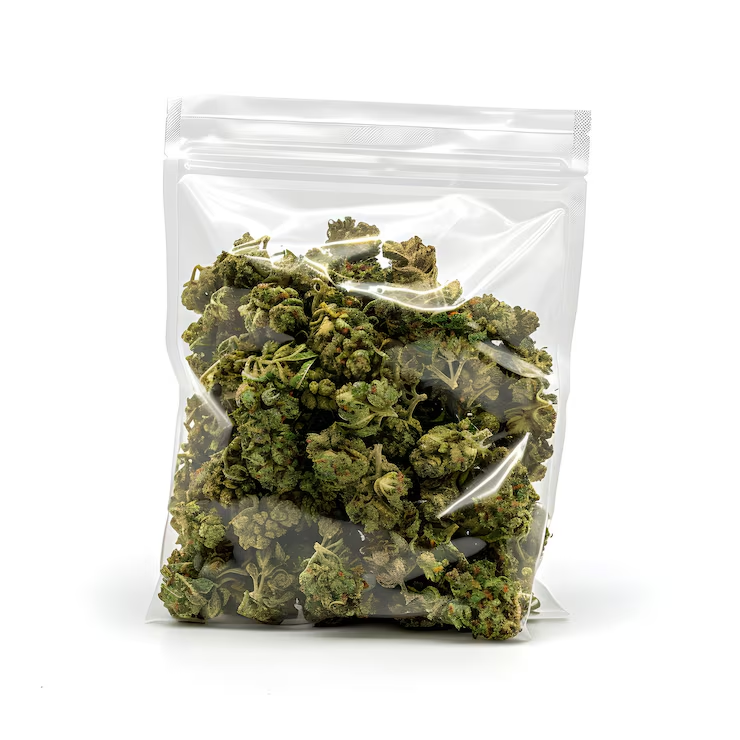
A zip of weed is slang terminology for one ounce of cannabis flower, equal to 28 grams—a quantity that represents the maximum daily purchase limit in many recreational cannabis states. Understanding this measurement helps consumers navigate dispensary purchases, budget appropriately, and communicate clearly within cannabis culture.
Whether you’re new to legal cannabis markets, exploring bulk purchasing options, or simply curious about cannabis terminology, this comprehensive guide explains everything about zips—from weight conversions to pricing expectations to visual identification.
How Much is a Zip of Weed?
A zip of weed equals exactly one ounce, or 28 grams of cannabis flower.
Metric Conversion
- 1 zip = 1 ounce = 28 grams
This represents a standard unit in cannabis commerce, particularly in legal markets where ounces serve as common purchase increments.
Relation to Smaller Amounts
Understanding how a zip breaks down helps with purchasing decisions:
- 1 zip = 8 eighths (each eighth is 3.5 grams)
- 1 zip = 4 quarters (each quarter is 7 grams)
- 1 zip = 2 half-ounces (each half is 14 grams)
Usage Estimates
How long a zip lasts depends on consumption frequency and method:
Light Consumers (2-3x weekly):
Could last 2-3 months
Moderate Consumers (daily, 1 joint/session):
Approximately 1 month
Heavy Consumers (multiple sessions daily):
1-2 weeks
Sharing:
Duration decreases with social consumption
Where the Term “Zip” Comes From
The slang has practical origins in pre-legalization cannabis culture.
Ziplock Bag Association
Historical Context:
Before medical marijuana legalization, many dispensaries operated on flexible, deli-style models rather than pre-packaged sales.
The Connection:
- Standard Ziploc bags hold approximately one ounce of cannabis
- Cannabis was often packaged in these resealable bags
- “Zip” became shorthand for the amount that fills a standard Ziplock
- The term stuck even as packaging evolved
Discretion Factor
Code Language:
Beyond legal dispensary sales, “zip” provided a way to discuss quantities without arousing suspicion from authorities. Saying “I need a zip” is less obvious than “I want an ounce of marijuana.”
Modern Usage
Even with legalization, the term persists:
- Convenient shorthand
- Part of established cannabis vocabulary
- Sounds less clinical than “one ounce”
- Cultural continuity from pre-legal markets
Zip of Weed Weight Conversions
Understanding measurement relationships helps with purchasing.
Grams to Ounces
Basic Conversion:
- 28 grams = 1 ounce = 1 zip
Common Increments:
- 1 gram = individual purchase
- 3.5 grams = eighth of an ounce
- 7 grams = quarter of an ounce
- 14 grams = half ounce
- 28 grams = full ounce (zip)
Ounces to Pounds
Larger Quantities:
- 1 zip = 1 ounce
- 16 zips = 1 pound (also called a “pizzle”)
- 1 pound = 16 ounces = 448 grams
Note:
Most consumers never purchase pound quantities. These amounts are typically producer/distributor level.
Joints and Blunts
Rolling Estimates:
A zip can yield approximately:
- 28 one-gram joints (standard personal joint)
- 56 half-gram joints (smaller, lighter consumption)
- 14 two-gram blunts (larger, social consumption)
Actual numbers vary based on rolling technique and personal preferences.
Visual Understanding
Different strains have varying densities, so a zip of one strain may look different from a zip of another:
Dense Indica:
Compact, heavy buds—might appear as 20-25 medium nugs
Fluffy Sativa:
Lighter, airier buds—might appear as 30-40 smaller nugs or fewer large ones
Regardless of appearance, weight remains 28 grams.
What Does a Zip of Weed Cost?
Pricing varies dramatically based on multiple factors.
National Average Ranges
General Pricing (2024-2025):
| Quality Tier | Price Range |
|---|---|
| Low-Shelf | $100-$150 |
| Mid-Shelf | $150-$250 |
| Top-Shelf | $250-$400+ |
Important:
These are approximate national averages. Local pricing varies significantly.
Factors Affecting Price
Location:
- Legal markets: Generally higher due to taxes
- Mature markets (CA, CO, OR): Often lower due to competition
- New markets (NY, NJ): Higher due to limited supply
- Illegal markets: Varies widely
Quality:
- Outdoor-grown, low-THC: Cheaper
- Indoor, premium genetics, high-THC: Expensive
- Exotic strains, limited batches: Premium pricing
- Organic, craft cannabis: Top-tier costs
Taxes:
- State excise taxes
- Local municipality taxes
- Sales tax
- Total tax burden can add 20-45% to base price
Season:
- Post-harvest (October-December): Often lower prices due to supply
- Spring/Summer: Sometimes higher due to decreased supply
Bulk Discount:
Ounces typically cost less per gram than smaller purchases. An ounce might be $200 while eighths of the same strain cost $35 each (totaling $280 if bought separately).
Example Pricing
Colorado (Mature Market):
- Budget ounces: $80-$120
- Mid-tier: $150-$200
- Premium: $250-$350
California (Mature, Competitive):
- Budget: $100-$150
- Mid-tier: $180-$250
- Premium: $300-$450
Illinois (Newer, High Tax):
- Budget: $200-$280
- Mid-tier: $300-$400
- Premium: $450-$600+
What Does a Zip of Weed Look Like?
Visual identification helps set expectations.
Quantity Appearance
Container Size:
A zip of weed should fit comfortably in:
- A large Ziplock bag (where the name originates)
- A quart-sized mason jar
- Approximately 2 cups volume (though varies by density)
Bud Count
Typical Range:
20-40 individual buds or nugs, depending on:
- Bud size (popcorn vs premium)
- Strain density
- Trim quality
Examples:
- All small popcorn buds: 35-50 pieces
- Mix of sizes: 25-35 pieces
- Large, premium nugs: 15-25 pieces
Density Variations
Dense Strains:
- Compact, heavy feeling
- Less volume for the weight
- Common in indica varieties
- Might look like “less” but weighs correctly
Fluffy Strains:
- Light, airy structure
- More volume for the weight
- Common in sativa varieties
- Might look like “more” but weighs the same
Visual Deception:
Never judge amount by appearance alone. Different cannabis strains and curing methods create vastly different densities. What looks like a half ounce of one strain might weigh a full ounce of another.
Stem Weight Consideration
Reality:
Some weight comes from stems and moisture, not just smokable flower.
Normal Range:
Stems typically account for 10-15% of total weight in well-trimmed flower.
Quality Indicator:
Excessive stem weight suggests poor trimming or lower quality.
How Many Grams in a Zip of Weed?
Exactly 28 grams equals one zip of weed.
Metric Precision
The conversion is straightforward:
- 1 ounce = 28.3495 grams (technically)
- Cannabis industry standard: 28 grams (simplified)
Most dispensaries and dealers use 28 grams as the standard ounce measurement.
Breaking Down the Zip
How 28 grams divides:
- Eighths: 28g ÷ 8 = 3.5 grams each
- Quarters: 28g ÷ 4 = 7 grams each
- Halves: 28g ÷ 2 = 14 grams each
Why Grams Matter
Dosing:
Understanding gram amounts helps calculate:
- How many sessions a zip provides
- Appropriate pricing per gram
- Portion control for different uses
Value Comparison:
Price per gram helps compare value across different quantity purchases.
Example:
- Eighth (3.5g) at $35 = $10/gram
- Zip (28g) at $200 = $7.14/gram
- Savings: $2.86 per gram buying in bulk
Converting Zips to Other Amounts
Understanding conversions helps with purchasing decisions.
Zips to Smaller Increments
From One Zip:
- 8 eighths (3.5g each)
- 4 quarters (7g each)
- 2 halves (14g each)
- 28 individual grams
Zips to Larger Quantities
Quarter Pound:
- 4 ounces = 4 zips
- 112 grams total
- Abbreviated “QP”
Half Pound:
- 8 ounces = 8 zips
- 224 grams total
Pound:
- 16 ounces = 16 zips
- 448 grams total
- Also called “pack” or “pizzle”
Note: Most consumers never need quantities beyond an ounce.
International Considerations
Countries Using Grams:
In regions that don’t commonly use ounces, cannabis is measured purely in grams:
- Quarter = 7g
- Half = 14g
- Ounce = 28g
- No “zip” terminology typically
Legal Purchase Limits
Regulations restrict how much you can buy.
Recreational State Limits
Most Common:
One ounce (one zip) per day per adult
Examples:
- California: 1 ounce per day
- Colorado: 1 ounce per day (residents), 1/4 oz per day (non-residents)
- Oregon: 1 ounce per day
- Michigan: 2.5 ounces per day
- Illinois: 1 ounce per day (residents), 15g per day (non-residents)
Medical Program Limits
Generally Higher:
Medical patients often have increased limits:
- 2-3 ounces per day common
- Some states allow even more
- Physician recommendations may increase limits further
Possession Limits
At Home:
Many states allow larger possession amounts at private residences than purchase limits:
- California: 1 oz purchase, 1 oz public possession, unlimited home possession
- Colorado: 1 oz purchase, 2 oz home possession
- Oregon: 1 oz purchase, 8 oz home possession
Public:
Carrying limits are typically the same as purchase limits (1 ounce).
Enforcement
Tracking:
Many states use seed-to-sale tracking systems that log purchases and prevent exceeding daily limits at different dispensaries.
Consequences:
Exceeding limits can result in:
- Refused sales
- Temporary purchase bans
- In serious cases, legal penalties
Storage and Freshness
Proper storage maintains quality.
Optimal Storage Conditions
Container:
- Glass mason jars with airtight seals (best)
- CVault containers (humidity-controlled)
- Avoid plastic bags long-term (static pulls trichomes off)
Temperature:
- 60-70°F (15-21°C) ideal
- Avoid refrigerators (too humid)
- Avoid freezers (trichomes become brittle)
Humidity:
- 58-62% relative humidity optimal
- Use humidity control packs (Boveda, Integra)
- Too dry = harsh smoke, degraded terpenes
- Too moist = mold risk
Light:
- Store in complete darkness
- UV light degrades cannabinoids and terpenes
- Dark-tinted glass helps if clear jars used
Air Exposure:
- Minimize opening containers
- Fresh air introduces oxygen (accelerates degradation)
- Oxidation converts THC to CBN (more sedative)
Shelf Life
Properly Stored:
- 6-12 months maintaining quality
- Gradual potency and terpene loss over time
- Still usable after a year but diminished
Poorly Stored:
- Noticeable degradation in weeks to months
- Dried out, harsh, less potent
Signs of Degradation
Visual:
- Brown or faded color (was bright green)
- Crumbly, dry texture
- Reduced trichome coverage
Smell:
- Weak aroma (terpenes evaporated)
- Hay or grass smell (over-dried)
- Musty smell (possible mold)
Taste:
- Harsh smoke
- Muted flavors
- Unpleasant aftertaste
Frequently Asked Questions
What is a zip of weed and how much does it weigh?
A zip of weed is slang for one ounce of cannabis flower, weighing exactly 28 grams. The term originated from the practice of packaging ounces in standard Ziplock bags, which could hold approximately this amount. A zip equals 8 eighths (3.5g each), 4 quarters (7g each), or 2 half-ounces (14g each). It’s the maximum daily purchase limit in most recreational cannabis states and represents a standard bulk purchase unit in legal markets.
How much does a zip of weed cost?
A zip of weed typically costs between $100-$400 depending on quality, location, and taxes. Budget ounces range $100-$150, mid-tier $150-$250, and premium $250-$400+. Mature markets like Colorado and California often have lower prices ($80-$300) while newer markets like Illinois have higher costs ($200-$600+). Factors affecting price include strain quality, growing method, local taxes (can add 20-45%), season, and market competition. Buying ounces provides better per-gram value than smaller purchases.
How many grams are in a zip of weed?
There are 28 grams in a zip of weed. While technically one ounce equals 28.3495 grams, the cannabis industry uses 28 grams as the standard. This breaks down to 8 eighths of 3.5 grams each, 4 quarters of 7 grams each, or 2 halves of 14 grams each. Understanding gram measurements helps calculate dosing, pricing per gram, and how long your purchase will last based on consumption frequency.
What does a zip of weed look like?
A zip of weed looks like 20-40 cannabis buds filling a large Ziplock bag or quart-sized mason jar (approximately 2 cups volume). The exact appearance varies significantly by strain density—dense indica buds might appear as 20-25 compact nugs, while fluffy sativa buds could look like 30-40 airier pieces. Different strains have varying densities, so a zip of one variety may look larger or smaller than another despite weighing the same 28 grams. Never judge quantity by appearance alone.
How many joints can you roll from a zip of weed?
You can roll approximately 28 one-gram joints, 56 half-gram joints, or 14 two-gram blunts from a zip of weed (28 grams total). Actual numbers vary based on rolling technique, desired joint size, and personal preferences. Standard personal joints typically use 0.5-1 gram, while larger social joints or blunts may use 1.5-2+ grams. A zip provides substantial quantity for regular consumers, potentially lasting weeks to months depending on consumption frequency.
Is a zip of weed the same in grams everywhere?
Yes, a zip of weed always equals 28 grams globally, though the term “zip” is primarily used in North America. International markets may not use the slang “zip” and instead refer directly to grams or ounces. The metric conversion remains constant: 1 ounce = 28 grams = 1 zip. However, legal purchase limits vary by jurisdiction—some allow one ounce daily, others restrict to smaller amounts. The weight measurement is universal even if terminology and regulations differ.