
Cannabis Education, Strain Guides
What Is THCv? 5 Surprising Facts About This Powerful Cannabinoid
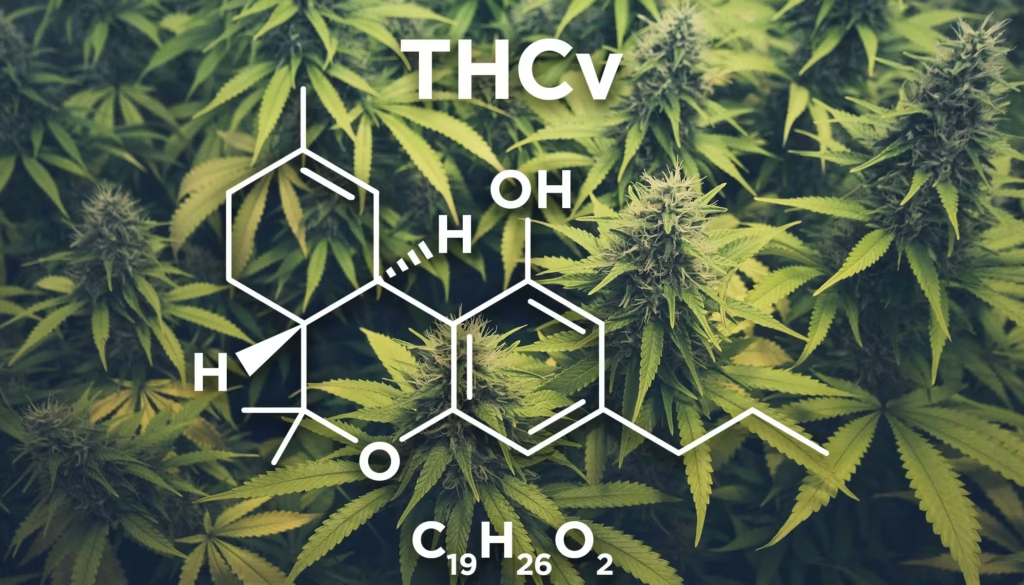
If you have been exploring the world of cannabis compounds beyond THC and CBD — what is THCv is one of the most fascinating questions you can ask. Tetrahydrocannabivarin — THCv — is a minor cannabinoid naturally occurring in cannabis that is gaining significant attention for its unique properties and potential benefits. Non-psychoactive in lower doses and interacting with the body in ways distinctly different from THC — this compound is quickly becoming one of the most discussed minor cannabinoids in the cannabis community. In this complete Sunnyside guide we break down everything you need to know.
Table of Contents
- What Is THCv
- How Is THCv Produced
- THCv vs THC — Key Differences
- What Does THCv Do
- What Is THCv In Edibles
- 5 Surprising Facts About THCv
- FAQ
What Is THCv
So what is THCv exactly? Tetrahydrocannabivarin is a naturally occurring minor cannabinoid found in cannabis — present in smaller amounts than major cannabinoids like THC and CBD but playing a potentially pivotal role in both the body and mind. Unlike THC — what is THCv in terms of psychoactivity — it is non-psychoactive in lower doses meaning it will not create an intoxicating effect at typical consumption levels making it a uniquely interesting compound for consumers seeking the benefits of cannabis without the high.
The what is thcv reddit community has grown significantly as more consumers discover this compound and begin exploring its unique interaction with the endocannabinoid system — sharing experiences and insights that are helping to build a broader understanding of what this minor cannabinoid can offer.
How Is THCv Produced
Understanding how this compound is produced reveals why it is structurally and functionally distinct from THC. Most cannabinoids including THC and CBD are produced via the precursor cannabigerolic acid — CBGA — formed from the reaction between olivetolic acid and geranyl pyrophosphate.
THCv follows a slightly different pathway:
- Step 1 — instead of reacting with olivetolic acid geranyl pyrophosphate reacts with divarinolic acid — a very similar molecule but with two fewer carbon atoms
- Step 2 — this reaction leads to the formation of cannabigerovarinic acid — CBGVA
- Step 3 — CBGVA then reacts with an enzyme called THCv synthase to form tetrahydrocannabivarin carboxylic acid — THCVA
- Step 4 — THCVA is then broken down into THCv via the exact same decarboxylation process — exposure to heat — that THCA undergoes to produce THC
Those two fewer carbon atoms in the starting molecule are what make THCv structurally distinct from THC — and that structural difference is what drives its unique interaction with the endocannabinoid system.
THCv vs THC — Key Differences
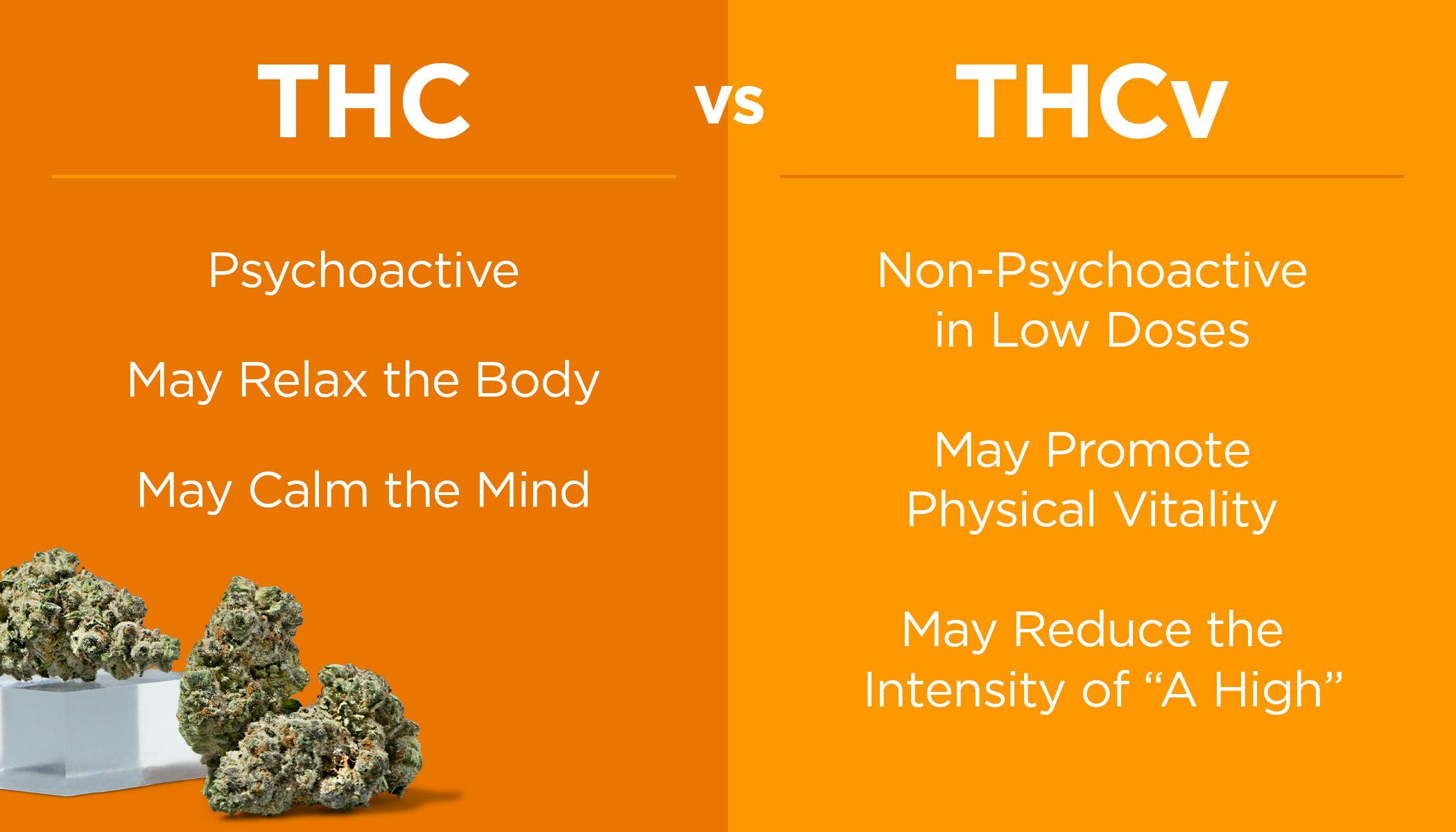
The what is thcv vs thc distinction is the most important one for consumers to understand — and it comes down to how each compound interacts with the endocannabinoid system at a molecular level.
Within the endocannabinoid system:
- Weak partial agonist of both CB1 and CB2 receptors
- Stimulates CB1 receptors in the brain
- Produces the classic psychoactive experience of being high
- Intoxicating at all typical consumption doses
- Acts as an antagonist of CB1 receptors — meaning it reduces rather than stimulates
- Acts as a partial agonist of CB2 receptors
- Non-psychoactive in lower doses
- Can counteract some of the psychoactive effects of THC
Understanding what is thc vs thcv in practical terms — THCv essentially works in the opposite direction to THC at the CB1 receptor — potentially moderating the intoxicating experience while engaging the endocannabinoid system through CB2 in ways that could deliver independent beneficial effects.
The what is the difference between thc and thcv question is therefore both structural — two fewer carbon atoms in the molecular chain — and functional — opposing actions at the CB1 receptor of the endocannabinoid system.
What Does THCv Do
This minor cannabinoid can potentially help with aiding the body’s natural recovery process and promoting physical comfort. These qualities make it a compelling candidate for consumers looking to add something meaningful to their post-workout routine or daily wellness practice.
THCv is a cannabinoid normally found in sativa strains — interacting with the endocannabinoid system in ways that could potentially support:
- Physical Comfort — promoting natural physical comfort and ease through its CB2 receptor activity
- Recovery Support — potentially supporting the body’s natural recovery process making it interesting for active consumers
- THC Moderation — its CB1 antagonist activity means it may counteract some of the psychoactive effects of THC when consumed together — potentially delivering a more balanced and controlled cannabis experience
- Endocannabinoid Engagement — engaging the ECS through CB2 in ways that are distinct from both THC and CBD — adding a unique dimension to the full spectrum cannabis experience
Individual results may vary.
What Is THCv In Edibles
What is THCv in edibles — and why is this consumption format growing in popularity for this particular compound? THCv in edible format delivers the same endocannabinoid system interaction as other consumption methods — but through the digestive system for a slower onset and longer lasting experience.
Key considerations for THCv edibles:
- Onset Time — like all edibles THCv edibles take 45-90 minutes to take full effect — always start low and go slow
- Duration — edible effects last significantly longer than smoking or vaping — typically 4-8 hours depending on individual metabolism and dose
- Dose Control — edibles allow for precise THCv dosing — important for consumers exploring this compound for the first time
- Combined Formulas — many THCv edibles combine this compound with CBD or full spectrum cannabis oil for a more complete entourage effect experience
Browse our full Cannabis Edibles and Minor Cannabinoid Products at Sunnyside for the best THCv product options available today.
5 Surprising Facts About THCv
1 — It Is Non-Psychoactive In Lower Doses Unlike THC — this minor cannabinoid does not create an intoxicating effect at lower consumption levels — making it accessible for consumers who want the potential benefits of cannabis without the high.
2 — It Can Counteract THC By acting as a CB1 antagonist — this compound can actually reduce some of the psychoactive effects of THC — making it a genuinely unique tool for consumers seeking a more balanced cannabis experience.
3 — It Comes From A Different Molecular Pathway The two fewer carbon atoms in divarinolic acid versus olivetolic acid is what separates this compound from THC at the molecular level — a small structural difference with significant functional consequences.
4 — It Is Found Primarily In Sativa Strains This minor cannabinoid is typically found in sativa cannabis strains — making sativa-dominant products the most likely source for consumers seeking THCv-rich cannabis experiences.
5 — The What Is THCv Reddit Community Is Growing Fast The what is thcv reddit community has become one of the most active and informative spaces for consumers sharing real-world experiences with this compound — a sign of the rapidly growing interest in minor cannabinoids beyond THC and CBD.
Frequently Asked Questions
Q: What is THCv? What is THCv — Tetrahydrocannabivarin is a naturally occurring minor cannabinoid found in cannabis — non-psychoactive in lower doses and interacting with the endocannabinoid system in ways distinctly different from THC — gaining attention for its unique potential benefits.
Q: What is THCv vs THC? What is thcv vs thc — THCv acts as a CB1 antagonist reducing rather than stimulating the receptor that produces the psychoactive high — while THC is a CB1 agonist that stimulates it. Both interact with CB2 receptors but in different ways and to different degrees.
Q: What is THC vs THCv in simple terms? What is thc vs thcv simply — THC gets you high by stimulating CB1 receptors while THCv does the opposite at lower doses by blocking them — potentially moderating the intoxicating effects of THC when both are present.
Q: What is the difference between THC and THCv? What is the difference between thc and thcv is both structural — two fewer carbon atoms in the molecular chain — and functional — opposing actions at the CB1 receptor resulting in fundamentally different psychoactive profiles at typical consumption doses.
Q: What is THCv in edibles? What is thcv in edibles refers to cannabis edible products formulated with this minor cannabinoid — delivering its unique endocannabinoid system interaction through the digestive system for slower onset longer lasting effects with precise dose control.