
Cannabis Education
What Is THCa? 6 Surprising Facts About THCa vs THC Every Consumer Must Know
What Is THCa? The Complete Guide To THCa vs THC Explained
If you have ever looked closely at a cannabis product label and noticed a percentage listed as THCa alongside THC, you may have wondered — what is THCa and how is it different from regular THC? As the cannabis industry continues to evolve, cannabinoids beyond THC and CBD are gaining serious attention for their unique properties and potential benefits. This complete guide breaks down everything you need to know about THCa — what it is, how it works, and why it matters for your cannabis experience at sunnyside dispensary.
Table of Contents
- What Is THCa
- THCa vs THC — Key Differences
- What Is Decarboxylation
- What Does THCa Do
- Potential Benefits Of THCa
- Forms Of THCa And How To Use Them
- FAQ
What is THCa exactly? THCa stands for tetrahydrocannabinolic acid — the naturally occurring acidic form of THC found in raw and live cannabis plants. Here is the key thing to understand — cannabis plants do not actually create THC directly. They create THCa first, and THCa then becomes THC when exposed to the right conditions — specifically heat.
In its natural raw state, what is THCa in terms of effects? Essentially nothing psychoactive. THCa is completely non-intoxicating in its natural form — meaning consuming raw cannabis rich in THCa will not produce the high typically associated with cannabis. It is only after THCa converts to THC through a process called decarboxylation that the psychoactive effects occur.
The precursor to THCa is CBGa — often referred to as the mother cannabinoid. As a cannabis plant grows it produces CBGa first, which then transforms into other cannabinoids including THCa and CBDa. This is why CBGa sits at the foundation of the entire cannabinoid production process.
THCa vs THC — Key Differences
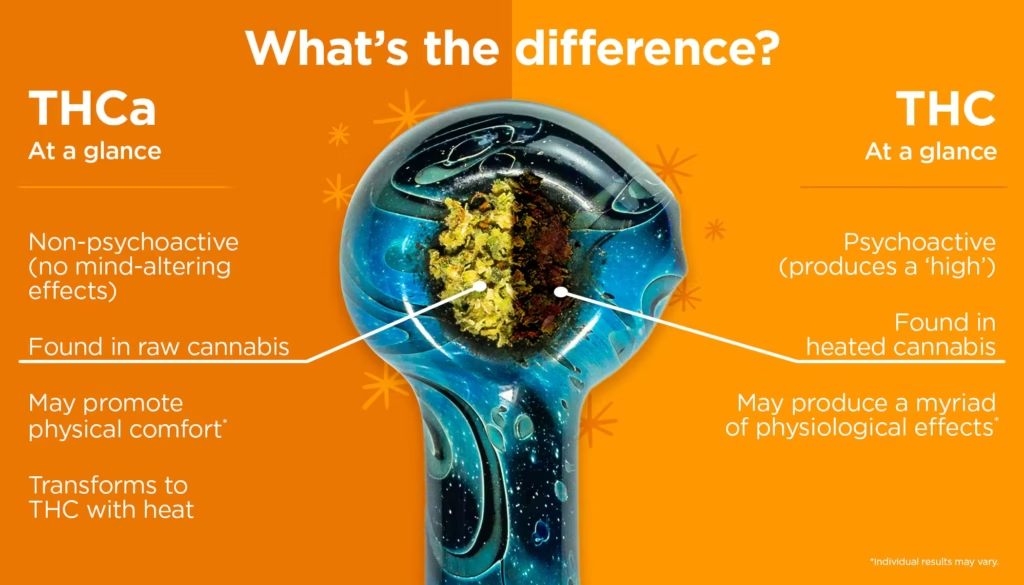
Understanding what is THCa requires understanding how it differs from THC. Here is a clear breakdown:
| Factor | THCa | THC |
|---|---|---|
| Natural State | Found in raw live cannabis | Produced through heat |
| Psychoactive | No | Yes |
| CB Receptor Binding | Cannot bind | Binds to CB1 and CB2 |
| Produced By | Living cannabis plant | Decarboxylation of THCa |
| Raw Cannabis | Rich in THCa | Minimal THC |
| After Heating | Converts to THC | Active psychoactive compound |
The most critical difference is how each compound interacts with your body. THCa does not have the ability to bind to the CB receptors in your endocannabinoid system — the receptors responsible for producing the cannabis high. It is only after THCa converts to THC that your body can access the full range of effects associated with cannabis consumption. Browse our full range of THC products at sunnyside dispensary for premium cannabis options.
What Is Decarboxylation
Decarboxylation is the chemical reaction that transforms THCa into THC — and it is the key process that makes cannabis psychoactive. When cannabis is smoked, vaporised, or cooked, heat causes THCa to lose its carboxyl group and convert into active THC. This is why heated cannabis products are psychoactive while raw cannabis is not.
Here is what you need to know about decarboxylation:
- Temperature Range — THCa converts to THC between 220 and 245 degrees Fahrenheit — staying within this range is critical for proper activation
- Too Low — going below 220 degrees means THCa will not fully activate into THC
- Too High — going above 245 degrees risks burning off the THC entirely — reducing potency significantly
- Already Activated Products — distillate and RSO cannabis oils are created using heat meaning the end result is already decarboxylated and fully active THC
- Raw Products — making topicals, tinctures, or edibles from raw THCa plant material requires heating the material first if you want psychoactive effects
Browse our full range of Cannabis Edibles and Vapes at sunnyside dispensary — all products are fully activated and ready to use.
What Does THCa Do
Most of the time when people buy THCa they are intending to convert it to THC through smoking or vaping. However a growing group of consumers ingest raw THCa for its own potential benefits without any psychoactive effects.
While research around what is THCa in terms of therapeutic benefits remains limited, there are a growing number of anecdotal accounts that speak to the potential of this fascinating cannabinoid. What we do know is that THCa interacts with the body very differently from THC — offering a distinct and non-intoxicating experience that appeals to consumers seeking wellness benefits without the high.
Potential Benefits Of THCa
Current research and anecdotal evidence suggest several potential benefits of THCa:
- Natural Recovery Support — THCa may help support the body’s natural recovery processes making it a popular choice among wellness-focused cannabis consumers
- Cognitive Health — some studies indicate that THCa may encourage cognitive health and mental clarity
- Digestive Comfort — THCa may help promote a settled stomach and digestive comfort for some consumers
These claims have not been evaluated by the FDA. This product is not intended to diagnose treat cure or prevent any disease. Individual results may vary.
Forms Of THCa And How To Use Them
What is THCa available as in terms of product forms? Here are the most common:
THCa Isolate A pure powder form of THCa — similar in appearance to kief. Can be used to add potency to flower or concentrates. The key is isolating THCa without heat to prevent conversion to THC during production.
THCa Diamonds Technically the same as THCa isolate but in crystal form rather than powder. Created through more labor-intensive processing techniques. Often added to concentrates to improve appearance and increase potency — making them a favorite among cannabis connoisseurs.
THCa Flower All cannabis flower is technically THCa flower. Flower will only test positive for THC after it has been heated or degraded. This represents a unique legal consideration for consumers — the products do not become active THC until they are decarboxylated through heating.
Raw Consumption Methods
For consumers interested in exploring the non-psychoactive potential benefits of THCa without converting it to THC:
- Juicing — fresh cannabis leaves and flowers can be juiced and consumed as a drink for direct THCa intake
- Smoothies — adding raw cannabis leaves to your morning smoothie is an easy and accessible way to incorporate THCa into your daily routine
- Raw Consumption — using raw cannabis leaves in salads or other dishes provides a direct source of THCa without any psychoactive effects
Why THCa Matters For Your Cannabis Experience
Understanding what is THCa empowers you to make smarter more informed cannabis choices. When you see a product label listing both THCa and THC percentages you now know that the THCa represents the raw unconverted cannabinoid content — and the total potential THC potency once activated through heat.
At sunnyside dispensary every product in our range is clearly labelled with complete cannabinoid information including THCa and THC percentages — giving you full transparency over exactly what you are consuming. Browse our complete Cannabis Education resources for more guides like this one.
Frequently Asked Questions
Q: What is THCa and is it the same as THC? THCa is the raw acidic precursor to THC found in living cannabis plants. It is not psychoactive in its natural state — it only becomes THC and produces a high after being heated through smoking vaping or cooking.
Q: Will THCa get you high? No — THCa in its raw form is non-psychoactive. It cannot bind to the CB receptors in your endocannabinoid system. It only becomes psychoactive after converting to THC through decarboxylation via heat.
Q: What temperature does THCa convert to THC? THCa converts to THC between 220 and 245 degrees Fahrenheit. Staying within this range during decarboxylation is essential for proper activation without burning off the THC.
Q: What are the potential benefits of THCa? Current research and anecdotal evidence suggest THCa may support natural recovery processes, encourage cognitive health, and promote digestive comfort — all without psychoactive effects in its raw form.
Q: How do I use THCa without converting it to THC? To use THCa without converting it to THC avoid any heat. Raw consumption methods include juicing fresh cannabis leaves, adding raw cannabis to smoothies, or incorporating raw cannabis leaves into food dishes like salads.
Q: What is the difference between THCa diamonds and THCa isolate? Both are pure forms of THCa — the difference is physical form. THCa isolate is a white powder while THCa diamonds are crystal formations created through more labor-intensive processing. Both can be added to flower or concentrates to increase potency.
Understanding what is THCa is just the beginning of your cannabis education journey. At sunnyside dispensary we are committed to providing the most transparent and informative cannabis experience possible — so you can make confident informed choices every single time you shop.
⚠️ For use by adults only. These statements have not been evaluated by the FDA. Always verify cannabis laws in your jurisdiction before purchasing. Keep out of reach of children.